Behind the Batch
From Farm to Jar
Every Root Cellar ingredient travels hours, not weeks. How we keep the chain short and the trust high.
Most beverage brands source ingredients from the cheapest supplier they can find, often on the other side of the world. Dried ginger from China. Chamomile from Egypt. Citrus concentrates from Brazil. The ingredient travels thousands of miles, sits in a warehouse, gets processed into an extract, and eventually ends up in a bottle with “natural” on the label.
We do the opposite.
Hours, Not Weeks
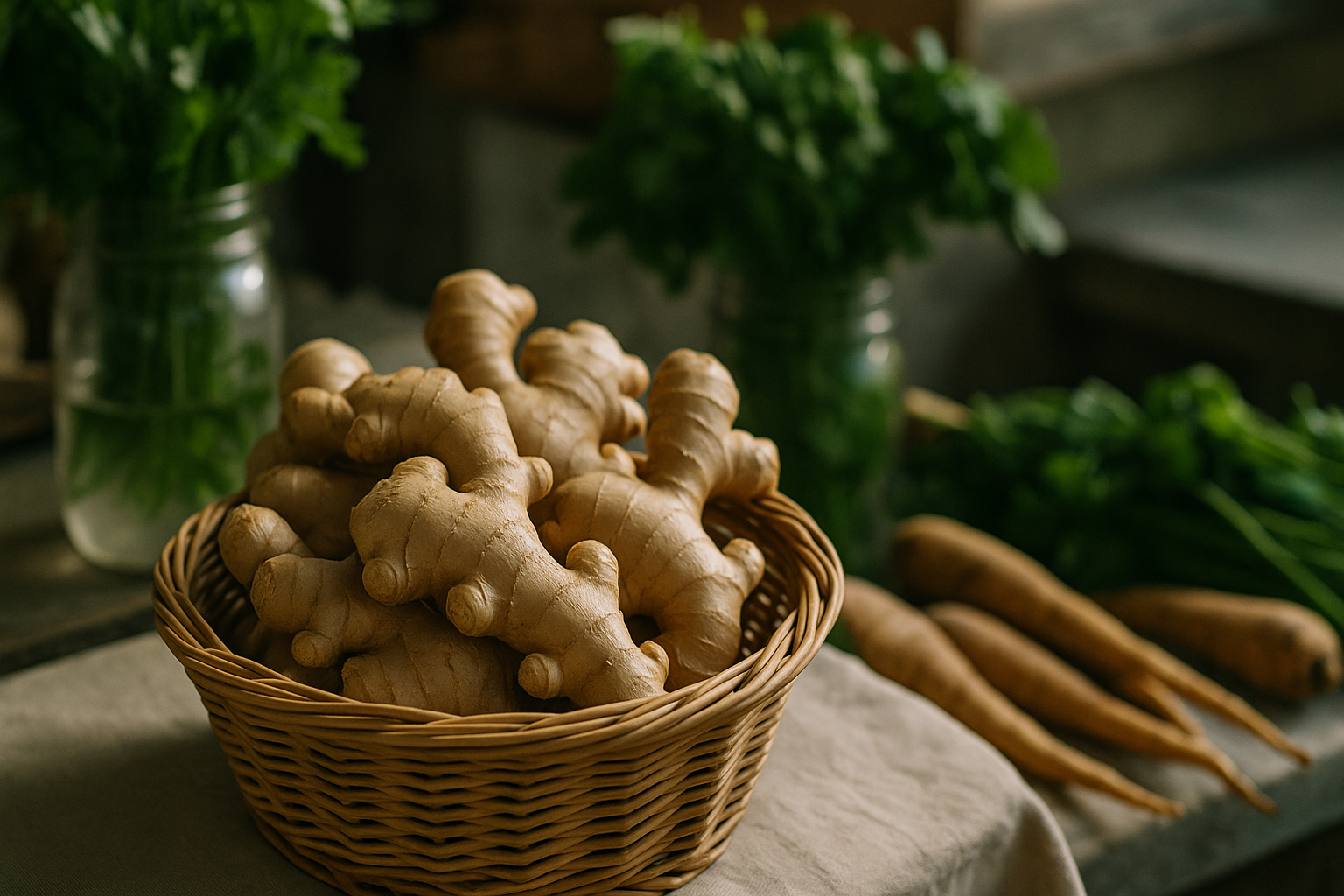
Our ginger comes from the Hudson Valley — a few hours from where we produce. Our chamomile comes from Vermont. Our citrus from California. Each ingredient travels the shortest distance possible from the farm that grew it to the water it steeps in.
This isn't just a feel-good story. Freshness directly impacts quality. Ginger loses volatile oils every day after harvest. Chamomile flowers begin degrading their essential oil content within hours of being cut. Citrus peel dries out and loses limonene in storage. A short supply chain means our ingredients arrive at peak potency.
Knowing the Grower
We buy from farmers, not distributors. We know their names. We know their fields. We know what they spray (nothing) and how they harvest (by hand, mostly). This isn't scalable in the way a global supply chain is scalable. But it's honest in a way that global supply chains can never be.
When we print a source farm on the label, it's a real place you could drive to. When we say “Hudson Valley ginger,” we mean ginger from a specific farm in the Hudson Valley, not a region on a commodity invoice.
“Transparency isn't a marketing strategy. It's what happens when you have nothing to hide.”
The Trade-Off
Local sourcing has real constraints. We can't produce unlimited quantities. Some ingredients are seasonal. Prices fluctuate with harvests. We can't always predict supply months in advance. These are the trade-offs of working with real farms instead of commodity markets.
We accept these constraints because the alternative — sourcing cheap ingredients from anonymous suppliers — would undermine everything Root Cellar stands for. Our customers aren't buying a commodity beverage. They're buying trust. And trust requires knowing exactly where things come from.
Batch Transparency
Every jar of Root Cellar includes a batch number, a harvest date, and a source farm. This isn't decoration. It's accountability. If you have a question about any batch, we can trace it back to the specific harvest and the specific grower who produced the ingredient.
In a world where most food labels are designed to obscure, ours are designed to reveal. That's the farm-to-jar promise: a supply chain short enough to be completely transparent.