Ingredients
Vermont Chamomile
Meet the family farm where our chamomile has grown for three generations.
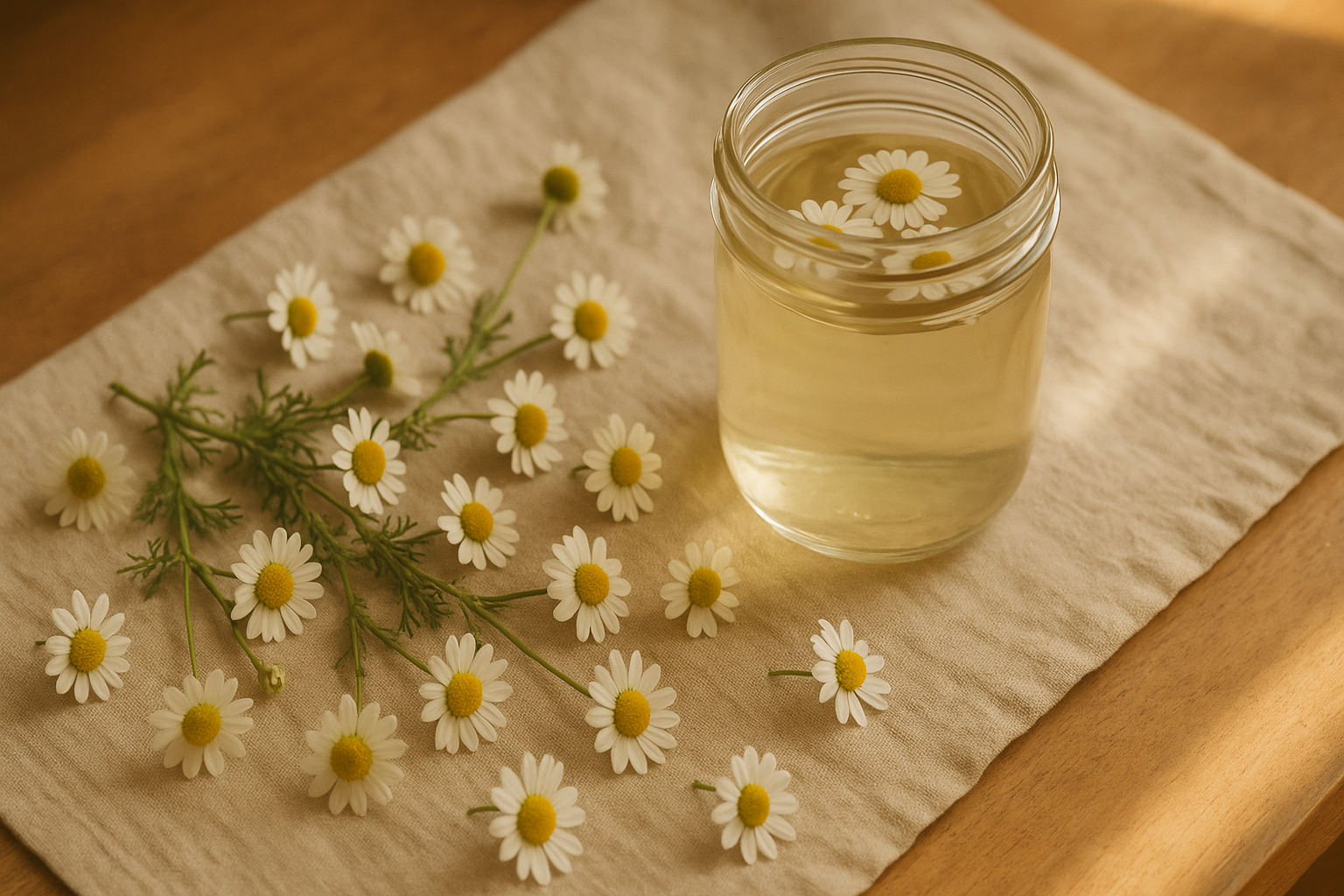
The Vermont Highlands sit at an elevation where the summers are short and the soil is rich. It's not the easiest place to farm. But for chamomile — German chamomile specifically — the conditions are close to perfect. Cool nights concentrate the essential oils in the flower heads. The mineral-dense soil adds depth that you can actually taste.
Three Generations of Growing
The farm that supplies our chamomile has been in the same family since the 1970s. It started as a small herb garden — culinary herbs sold at the Montpelier farmers market. Over time, the family discovered that their particular microclimate and soil composition produced chamomile with unusually high apigenin content.
Apigenin is the flavonoid responsible for chamomile's calming properties. Most commercial chamomile is grown in Egypt or Argentina, harvested mechanically, and dried for mass distribution. The flowers from our Vermont source are hand-harvested at peak bloom and delivered to us fresh — not dried — within 24 hours.
Fresh Flowers vs. Dried Flowers
Most chamomile products use dried flowers. Drying preserves shelf life, but it also reduces the volatile aromatic compounds — the delicate oils that give chamomile its honeyed, apple-like sweetness. When you steep dried chamomile in hot water, you get a pleasant but one-dimensional flavor.
Our Calm formula uses fresh flowers, cold-steeped. The difference is striking. There's a floral roundness that dried chamomile simply can't deliver. The aroma is more complex. The flavor has layers — sweet, then slightly grassy, then a soft herbal finish that lingers.
“The best chamomile we've ever worked with doesn't travel far. It doesn't need to.”
— Jake, Head of Product
Why Local Sourcing Matters
We could source chamomile from anywhere. Bulk dried chamomile from overseas would cost a fraction of what we pay our Vermont partners. But Root Cellar isn't built on fractions. It's built on the belief that every ingredient should have a story, a source, and a face behind it.
When you drink Calm, you're drinking flowers that grew in specific soil, harvested by people who know every row of their field by name. That connection matters — not just for the flavor, but for the kind of brand we want to be.
Seasonal by Nature
Chamomile has a natural growing season. In Vermont, that window runs from late June through early September. This means our Calm formula has seasonal variation — the July harvest tastes slightly different from the August harvest. The flowers are a little bigger, the oil content shifts slightly.
Most brands would see that as a problem. We see it as a feature. Every batch of Calm is marked with a harvest date, connecting you to a specific moment in the growing season. It's not manufactured consistency. It's real food, with all the natural variation that implies.
From Field to Jar
The journey from Vermont field to your jar is measured in hours, not weeks. Fresh chamomile flowers arrive at our production space, are gently rinsed, and go directly into cold filtered water. No drying step. No processing. No storage in between.
After 24 hours of cold steeping, the water has taken on a pale gold color and a soft floral aroma. We strain, bottle, and ship. The entire process respects the ingredient at every step — because chamomile this good deserves nothing less.