Behind the Batch
Why We Cold-Steep
The science behind our slow extraction process and why heat isn't always the answer.
Every beverage company in the world uses heat. Boil, brew, pasteurize, flash-heat — speed is the priority. Get the flavor out fast, get it into a bottle, get it on a shelf. It works. But it comes at a cost most people never think about.
What Heat Does to Plants
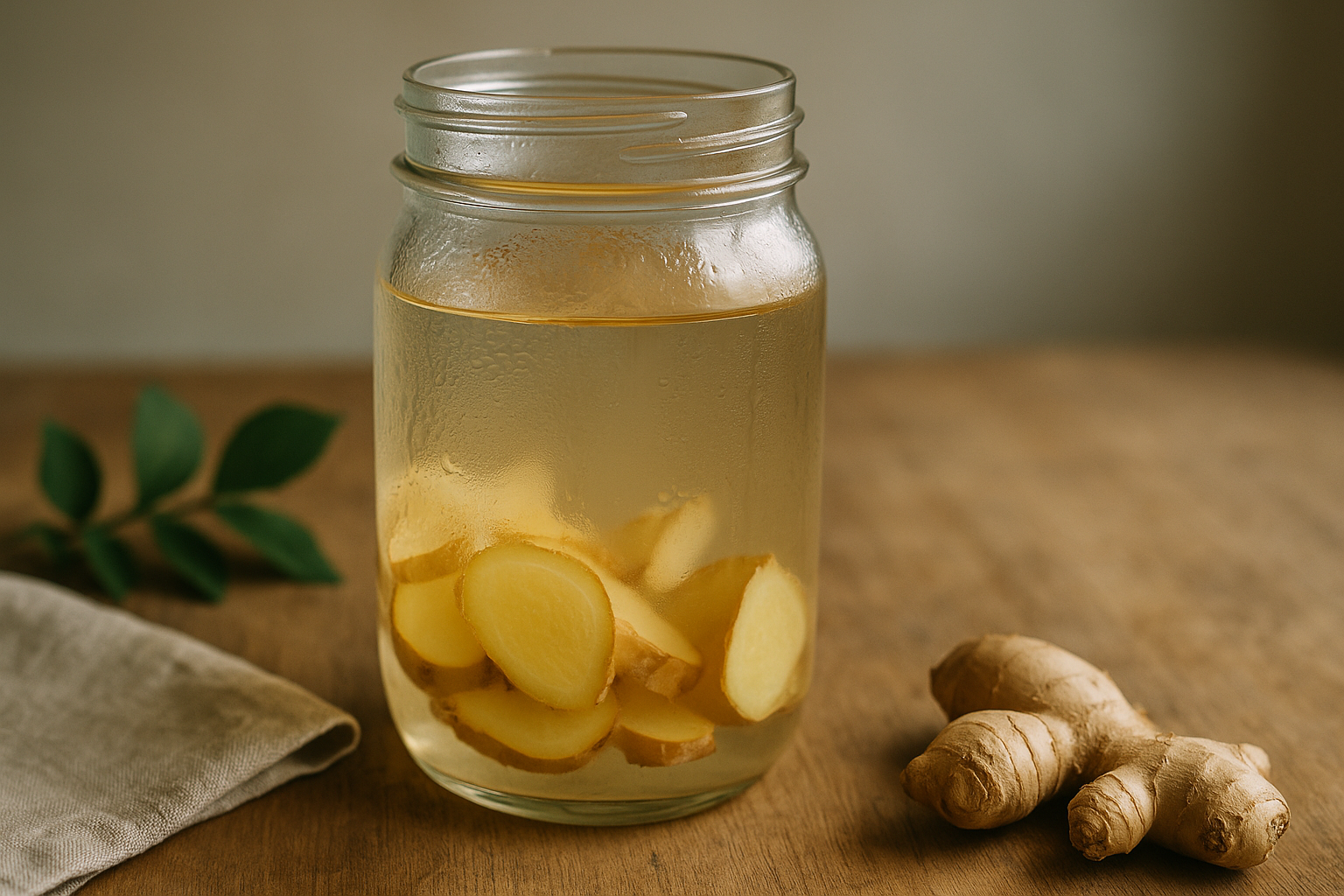
When you boil ginger, you extract gingerol — the compound responsible for that signature warmth. But heat also converts gingerol into shogaol, a different compound with a sharper, more pungent bite. That's fine for cooking. But for a daily wellness water, we wanted the original compound intact.
The same principle applies across our entire line. Chamomile's apigenin, citrus peel's limonene, the volatile aromatic oils in fresh herbs — these compounds are heat-sensitive. Pour boiling water over chamomile flowers and you get tea. Let them steep slowly in cold water over two days and you get something noticeably different. Softer. Rounder. More complex.
24 to 48 Hours
Our cold-steep process runs between 24 and 48 hours depending on the ingredient. Ginger sits on the longer end — its dense root structure releases compounds slowly at low temperatures. Chamomile and lighter herbs require less time. Citrus falls somewhere in between.
The water temperature stays between 35°F and 40°F throughout the process. Cold enough to prevent any bacterial growth. Warm enough that the water molecules can still pull compounds from the plant material. It's a narrow window, and we monitor every batch.
“Speed is efficiency. Patience is quality. We chose patience.”
The Taste Difference
Cold-steeped water tastes fundamentally different from brewed tea or hot-extracted beverages. There's no bitterness — that harsh edge comes from tannins and other compounds that release primarily at high temperatures. What you get instead is clean, smooth, and surprisingly nuanced.
Our ginger water has warmth without burn. The chamomile has floral depth without the flatness that comes from oversteeping. The citrus water tastes bright and alive, not cooked.
People often tell us the taste is “cleaner” than they expected. That's not an accident. It's the direct result of never applying heat.
Why Most Companies Don't Do This
Cold-steeping is slow. A batch of hot-brewed ginger tea takes minutes. Our Digest formula takes two days. From a production standpoint, that's wildly inefficient. It requires more space, more planning, and more patience than any manufacturer would recommend.
But we aren't building for speed. We're building for people who care about what's in their glass. And for those people, two extra days is a worthwhile trade.
No Heat. No Pressure. No Shortcuts.
Our process is simple enough to describe in one sentence: fresh ingredients, filtered water, cold temperature, time. There's no proprietary technology. No complex machinery. Just a commitment to doing the slow thing because it produces the better result.
Every jar of Root Cellar you open spent days becoming what it is. That patience is baked into every sip. And once you taste the difference, it's hard to go back to anything that was rushed.